AI Insurance Software
They bring their experience to the table instead of just executing the vision. They feel like a true partner.

CEO at lynk, USA
Throughout the project, their technical expertise, industry knowledge, and adaptability have made them excellent partners.

CEO & Co-Founder at wyldr, Germany
They understand the goals and translate them quickly into good architecture and code.

Founder & Managing Director at dinahmoe, Sweden
Communication has been impeccable, and we view our relationship as a true partnership where Binary Studio has provided valuable insights that go beyond the checkbox of development.

Paul Garner
CEO at pavementSoft, USA
Binary Studio has a very diligent hiring process, and a sharp team. I have not seen a single person who has been onboarded onto the team and is not able to help us right away.

SVP Engineering Management at snapCare, USA
-
200+
products backed by our team
-
4+
years average project duration
-
21
years of business excellence

Why choose Binary Studio for insurance projects
-
Product mindset
As an AI insurance software development company, we look beyond a feature list to understand how a product should behave. Your team gets proactive recommendations, clear tradeoffs, and AI development tied to business outcomes.
-
Vetted AI engineers
Our selective hiring process gives you access to strong ML, backend, frontend, QA, DevOps, and product engineering specialists. We assemble the capabilities your project needs, so you can move ahead without months of recruiting or managing multiple vendors.
-
Expertise in insurance domain
We know that intelligent insurance software must fit real underwriting, policy, billing, claims, and audit workflows. That context helps us design practical solutions for carriers, brokers, agencies, MGAs, benefits providers, and insurtech platforms.
-
End-to-end delivery
Our custom AI software development for insurance covers discovery, user experience, architecture, data pipelines, implementation, testing, release, and ongoing improvement. A single team owns the whole process and keeps accountability clear.
-
Flexible cooperation
Use a dedicated team, extend your in-house capacity, or entrust the full product lifecycle to us. Regular demos, accessible documentation, and direct communication give stakeholders visibility into progress, risks, spending, and technical decisions.
-
Security by design
We plan permissions, encryption, audit trails, data retention, human review, and output monitoring early. This approach supports regulatory compliance and helps protect sensitive information while keeping the system usable for employees, partners, and clients.
Our AI insurance software development services
-

AI app development
Our AI insurance app development services cover intuitive interfaces, secure backends, cloud infrastructure, integrations, and intelligent features such as document capture, recommendations, and next-best actions.
-

Machine learning development
Turn historical and real-time data into smart AI/ML models. Our engineers prepare data, select the right approach, validate performance, and create monitoring workflows that keep outputs useful over time.
-

AI assistant development
Give employees or policyholders a secure assistant grounded in approved policies, procedures, and account data. We can build solutions to locate coverage details, summarize files, prepare correspondence, and guide users through complex tasks.
-

MCP development
Connect intelligent assistants to insurance software through Model Context Protocol servers. We’ll define safe access to policy systems, claims platforms, CRMs, knowledge bases, and analytics tools.
-
AI chatbot development
Offer faster, round-the-clock answers with a custom chatbot. We can build chat experiences that support quote intake, policy questions, claim status updates, document collection, and agent handoffs while staying aligned with your brand and approved information.
-

AI consulting services
If you’re not sure about the product’s functionality, we can assess use cases, technical constraints, integration needs, risks, and success metrics to provide you with a practical roadmap for AI insurance solutions development.
AI solutions tailored to your business
Turn scattered data and manual work into AI systems that run routine operations and sharpen everyday decisions
Turn quick prototypes and risky ideas into secure, scalable products that validate your hypothesis and grow with your business
Choose your case
-
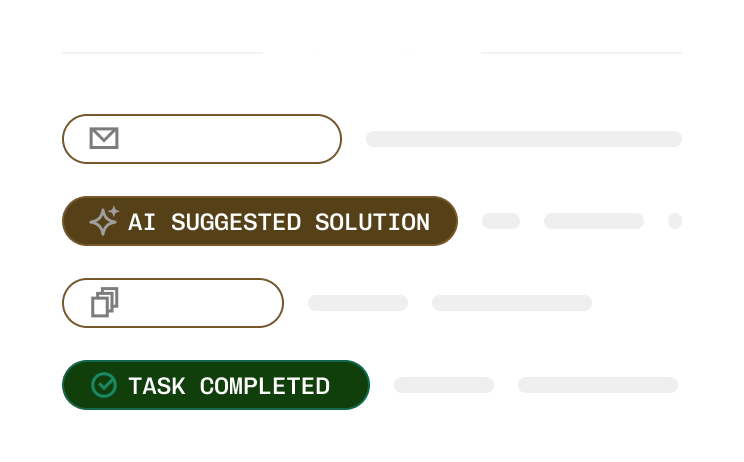
 Autonomous AI agents
Build AI agents that execute multi-step workflows across your systems, make decisions based on predefined logic, and escalate the exceptions to your team.
-
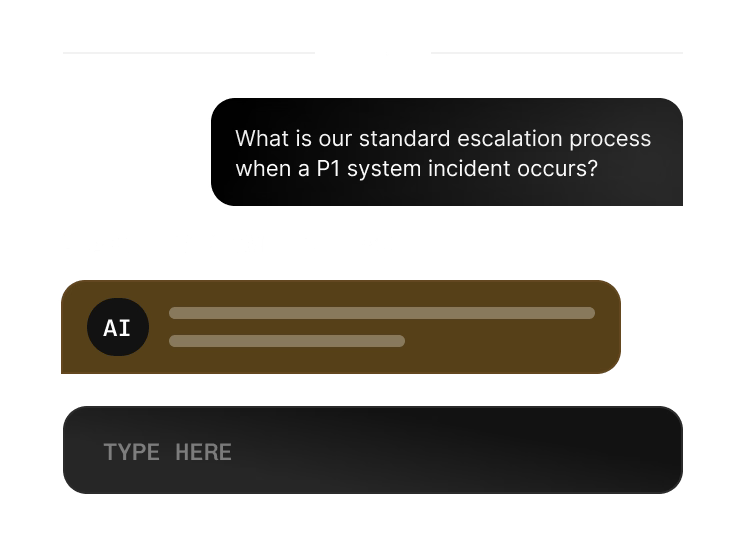
 RAG knowledge engines
Get a private AI knowledge system that generates accurate answers grounded in your scattered documents and systems — so your team stops searching for information.
-
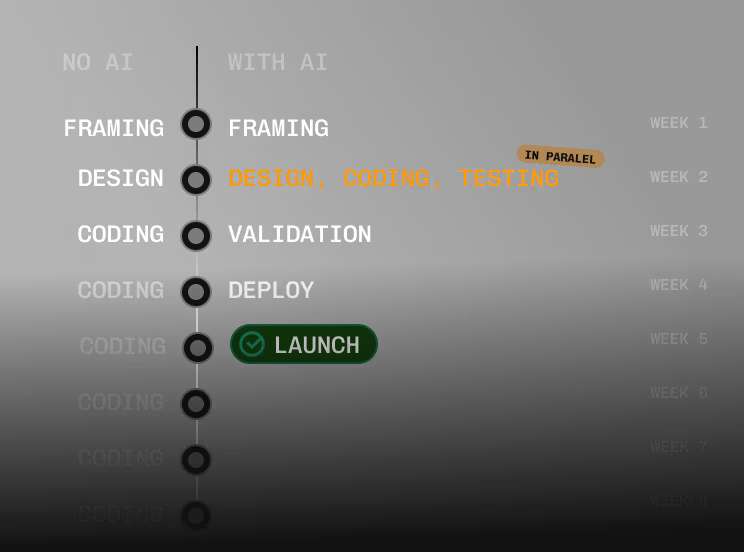
 AI-assisted MVP
Validate your idea with an MVP in weeks, not months. AI tools accelerate development while our engineers own the architecture and quality needed to scale safely.
-
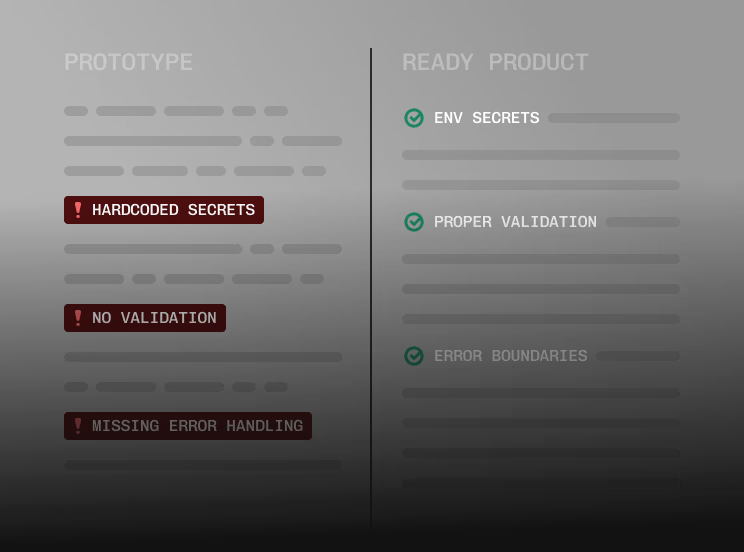
 Vibe coding cleanup
Turn your AI-generated prototype into a robust, secure product your business can grow on, closing security gaps and rebuilding it to handle real load.
Have a use case in mind? Let's scope it.
Key stages of AI insurance software delivery
Timelines vary with data readiness, integrations, and regulatory requirements, but a typical engagement includes the following stages.
- 01
Discovery and opportunity assessment
We map users, workflows, business goals, data sources, and regulatory constraints.
- 02
Solution design and team setup
We create the architecture, data strategy, integration plan, delivery roadmap, and early user flows.
- 03
Data and product engineering
Engineers of our insurance AI development company build the application, while you review working increments in regular demos.
- 04
Validation and launch
After testing, we deploy the product, prepare operational documentation, and support a controlled rollout.
- 05
Monitoring and improvement
Our team can refine workflows, retrain or replace models, add features, scale infrastructure, and respond to changing regulatory or customer needs.
- 06
Build a practical insurance product
We’ll help you scope a secure product that reduces manual work and supports better decisions.


Success stories


 USA
America's leading platform in healthcare staffing
Healthcare staffing marketplace with machine learning matching, credential verification,...


 Ukraine
Private AI knowledge engine for proposal estimation
AI-driven system that analyzes project requirements, applies historical delivery...

 USA
AI-powered family management platform
The digital family assistant, enabling secure memory preservation, event planning, and...


Industry recognition
Industries we build AI solutions for
-

Insurance
As an AI development partner, we can help carriers, brokers, and insurtech companies accelerate underwriting, automate document review, identify suspicious claims, and improve policyholder support. We’ll build a practical solution that fits your specific workflows.
-

Healthcare
Health plans and benefits platforms can use AI to streamline enrollment, eligibility checks, document review, member support, and case routing. We design secure solutions that handle sensitive information carefully.
-

Fintech
Financial platforms can apply AI across onboarding, lending, payments, investment, and risk management journeys. We create solutions for risk assessment, document intelligence, fraud detection, process automation, and customer support.
-

Proptech
Property managers, owners, lenders, and contractors can use custom-built AI solutions to review documents, assess property or project risks, automate routine workflows, monitor assets, and track incidents.
-

Logistics
For fleets, delivery networks, and mobility platforms, we can build AI solutions that analyze operational data, optimize routes and resources, flag unusual activity, and automate incident reporting.
-

Retail
We help retailers, marketplaces, brands, and technology providers use AI solutions to improve merchandising, demand forecasting, inventory planning, personalization, and customer service. The result is less repetitive work, faster response times, and smoother experiences.
Build a smart insurance solution
Connect your product, data, and workflows with a team that understands the industry context
What clients say about us
This is the third time I've used Binary Studio, and each time they've delivered with quality and reliability.

CTO at everbeat, USA

Binary Studio has a very diligent hiring process, and a sharp team. I have not seen a single person who has been onboarded onto the team and is not able to help us right away.
SVP Engineering Management at snapCare, USA

Communication has been impeccable, and we view our relationship as a true partnership where Binary Studio has provided valuable insights that go beyond the checkbox of development.
Paul Garner
CEO at pavementSoft, USA

They bring their experience to the table instead of just executing the vision. They feel like a true partner.
CEO at lynk, USA


Throughout the project, their technical expertise, industry knowledge, and adaptability have made them excellent partners.
CEO & Co-Founder at wyldr, Germany

Our insurance software tech stack
Frontend
- HTML

- CSS

- JavaScript

- Vue

- React

- Angular

- Electron


Mobile


QA
- Cypress

- Selenium

- Chai

- Playwright

- Puppeteer

- Mocha

- Jasmine

Database
- SQL Server

- MySQL

- PostgreSQL

- SQLite

- MongoDB

- Amazon RDS

- Google Cloud SQL

Frameworks
- Express.js

- Fastify

- Laravel

- Symfony

- CakePHP

- Redux

- ASP.NET

- Flask


Stack


AI
- LangChain

- n8n

- LangGraph

- Ollama

- OpenRouter

-
HTML
-
CSS
-
JavaScript
-
Vue
-
React
-
Angular
-
Electron
-
Cypress
-
Selenium
-
Chai
-
Playwright
-
Puppeteer
-
Mocha
-
Jasmine
-
SQL Server
-
MySQL
-
PostgreSQL
-
SQLite
-
MongoDB
-
Amazon RDS
-
Google Cloud SQL
-
Express.js
-
Fastify
-
Laravel
-
Symfony
-
CakePHP
-
Redux
-
ASP.NET
-
Flask
-
LangChain
-
n8n
-
LangGraph
-
Ollama
-
OpenRouter
AI insurance software FAQ
-
What insurance AI solutions can you build?
We build AI-powered products and features for document intake, risk assessment, underwriting support, fraud detection, claim triage, customer communication, and internal knowledge search. Each solution combines intelligent models with dependable application engineering, system integrations, security controls, and user-friendly workflows.
-
Can you integrate AI into our existing insurance platform?
Yes. We first assess the architecture, data flows, APIs, security requirements, and highest-value user journeys with your insurance team. Then, we add the new capability in a way that fits your current ecosystem, whether it involves a policy administration system, claims tool, CRM, data warehouse, or customer portal.
-
How long does an insurance software project take?
Discovery and solution design for an insurance client usually take two to four weeks. A focused MVP may take another six to twelve weeks, while a complex, integrated solution can require several months. We refine the estimate after reviewing data readiness, solution complexity, integration scope, security, and validation needs.
-
Why outsource instead of hiring an in-house team?
Outsourcing from an experienced AI insurance software development company gives you access to AI, data, application, QA, DevOps, and product expertise without separate hiring cycles. A mature partner also brings delivery processes, independent technical judgment, and the ability to scale the team as priorities change, while you retain product direction.
Who needs insurance AI development services
-

Startups
Validate a differentiated insurance software idea without building a full internal engineering organization. We help founders narrow the scope, prove technical feasibility, launch an MVP, and create a stable foundation for fundraising, customer feedback, and future growth.
-

Small businesses
Automate high-volume tasks, improve service, and make better use of existing data without adding unnecessary operational overhead. Our team can modernize an existing workflow or deliver custom AI software development for insurance as your long-term tech partner.
-

Enterprises
Add intelligent capabilities to established platforms while respecting complex architecture, governance, security, and stakeholder needs. We can own a defined initiative, provide specialist capacity, or work alongside internal teams on a phased transformation.
Schedule a tech consultation



Binary Studio website uses cookies to enhance your browsing experience. By continuing to use our site, you agree to our Privacy Policy and use of cookies.
